 Unlike scattered sources of property information, the Miami Dade Property Search system is a centralized and user-friendly hub. It is reliable and comprehensive, helping anyone navigate Miami Dade property appraiser data and property search Miami Dade results with ease. This homepage explains how the system works, why it’s essential, and the benefits for users.
The platform provides access to Truth in Millage (TRIM) Notices, exemption details, and assessment values, ensuring that property owners understand how their taxes are calculated. It also allows users to review sales history, aerial maps, and building sketches, making it a valuable resource for buyers, sellers, and researchers seeking accurate, transparent property data.
Or
Additionally, Miami Dade Property Search connects directly to the Property Appraiser’s Office and Clerk of Courts systems, enabling users to access official records such as deeds, mortgages, and liens. By consolidating these services online, the county promotes efficiency, reduces the need for in-person visits, and ensures that property information remains accessible to all residents and businesses.
Miami Dade Property Search by Address
For many, the easiest method to access information is the Miami-Dade Property Search by address. Simply enter an address to retrieve detailed Miami-Dade Property Records and ownership data.
This feature is handy for: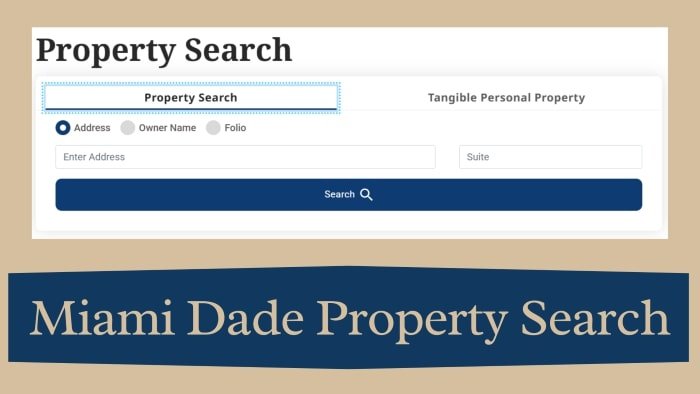
- Homebuyers researching potential purchases.
- Neighbors are curious about property values.
- Businesses evaluating commercial locations.
The Miami Dade Property Search by address makes property information accessible with minimal input, streamlining the search process for users.
Connection to miamidade.gov
The official portal www.miamidade.gov supports the property search system. Through www.miamidade.gov, users can access Miami-Dade Property Records, tax payment tools, exemption applications, and legal information.
Integration with www.miamidade.gov ensures that the Miami Dade property search system is part of a trusted government network, enhancing reliability and user confidence.
Why Miami Dade Property Search Matters?
Property ownership is one of the most significant aspects of modern life. For residents of Miami-Dade County, knowing the details of a property is not just about curiosity—it is about financial planning, legal clarity, and community awareness.
The Miami Dade Property Search tool enables users to:
- Verify ownership records.
- Understand property tax obligations.
- Explore neighborhood property values.
- Access historical property data.
- Conduct research for investment opportunities.
By offering transparency, the system builds trust between property owners, buyers, and government authorities. It ensures that property-related decisions are based on accurate, up-to-date information.
Navigating Property Search Miami
For those new to property databases, Property Search Miami and Miami Dade County Property Search offer a simple entry point. The system is designed for everyday users and does not require expertise in property law or taxation.
When someone enters a property address or the owner’s name, the system retrieves relevant details. This includes:
- Parcel number.
- Legal description.
- Assessed value.
- Tax history.
- Ownership transfers.
By making this information accessible, Property Search Miami and Miami Dade Property Search by address empower residents to make informed decisions. Whether you are buying a home, researching a neighborhood, or verifying property boundaries, these tools provide clarity.
Online Services of Property Search
Beyond property search, the platform provides a wide range of online services. These services are designed to simplify interactions between residents and county offices, reducing the need for in-person visits.
Examples of online services include: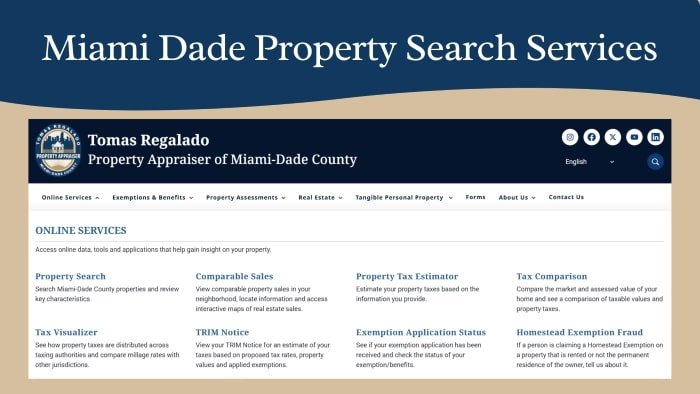
- Tax payment portals: Property owners can pay their taxes directly through secure online systems.
- Document requests: Users can request certified copies of property records, deeds, or assessment notices.
- Interactive maps: Geographic Information Systems (GIS) allow users to view properties in relation to neighborhoods, zoning boundaries, and flood zones.
- Appeals and petitions: Property owners who disagree with assessments can file appeals electronically.
- Customer support: Online chat or email services assist without requiring phone calls or office visits.
These services reflect Miami-Dade County’s commitment to modernization and accessibility. By digitizing processes, the county enables residents to manage property-related tasks from the comfort of their homes.
Features of Miami Property Search
The Miami Dade property search system is more than just a database; it is a gateway to understanding Miami-Dade County’s real estate landscape. It translates raw records into meaningful insights, helping people see how properties are documented, taxed, transferred, and valued within their neighborhoods.
Instead of overwhelming visitors with complex jargon, it presents information step by step, making it practical for homeowners seeking clarity, buyers seeking confidence, and researchers seeking patterns across time and place.
By organizing property data into clear, connected sections, the Miami property search experience turns an otherwise technical process into one that feels approachable and genuinely useful.
1. Comprehensive Records
Comprehensive records are central to the Miami Dade property search experience, offering users a complete picture of a property’s identity and history. When you search Miami Dade Property Records, you can view parcel numbers, legal descriptions, lot sizes, and ownership history.
These records also include historical assessments, changes in use, and recorded transactions that show how the property’s status has evolved over the years. This continuity matters because it offers more than a snapshot; it provides a timeline, allowing users to understand not just what a property is today, but how it became that way.
Beyond the basics, comprehensive records often shed light on the context behind the numbers. For example, seeing the sequence of past sales alongside changes in assessed value helps users interpret the property’s market trajectory rather than treating each data point in isolation. It becomes easier to distinguish routine fluctuations from significant shifts that might reflect renovations, zoning changes, or neighborhood development.
In practice, this depth of detail empowers buyers to verify sellers’ claims, helps homeowners confirm that their information is accurate, and gives researchers a reliable foundation for studying trends across blocks, districts, and time periods.
2. Tax Information
Tax details on the Miami Dade Property Search platform are organized for clarity, so users can quickly understand their obligations. You can view a property’s assessed value, exemptions, and annual tax history in one place. This transparency helps users manage budgets, compare historical taxes, and verify property assessments through the Miami Dade property appraiser system.
Exemptions and adjustments are also explained in context, reducing confusion and preventing costly misunderstandings. Whether a property qualifies for a homestead exemption or has special classifications, the details are tied back to the assessed value, so the financial impact is clear.
As a result, decisions feel informed rather than reactive. Buyers can plan long-term, homeowners can check for accuracy, and analysts can observe how policy, assessment practices, and neighborhood conditions influence tax burdens. In short, tax information isn’t just a figure on a page—it’s an understandable part of the property’s story.
3. Ownership Verification and Trust
Ownership verification is a central feature of Miami Dade Property Search, building trust in the real estate process. The platform displays the current recorded owner, prior ownership transfers, and dates, letting users confirm the legitimacy of ownership. This transparency reduces risk in transactions and ensures accurate Miami Dade property records.
The verification process does more than validate names; it anchors transactions in documented reality. Maintaining chain of title continuity reassures buyers that there are no hidden surprises, while homeowners can verify that their information matches what is officially recorded.
For agents and lenders, this accuracy streamlines underwriting and compliance. When property records are reliable and easily accessible, every participant—from first-time buyer to seasoned investor—can act with confidence. That confidence, in turn, is the foundation of a fair, functioning market where decisions are based on facts rather than assumptions.
4. Neighborhood Insights
Neighborhood insights in Miami Dade Property Search provide context by allowing comparisons of assessed values, sales histories, and property characteristics across similar properties in the same area. This helps users understand local property trends and identify what makes each property unique within its neighborhood.
These insights are especially valuable for buyers deciding between multiple options and for homeowners gauging how their property fits local trends. They reveal patterns such as rising values in specific corridors, stability in established neighborhoods, and variability in areas undergoing redevelopment. Researchers benefit too, as neighborhood-wide comparisons uncover broader shifts driven by infrastructure projects, school zones, or commercial growth. Most importantly, neighborhood insights transform raw data into perspectives that feel practical—helping users move from “what are the numbers?” to “what do these numbers mean here, now, and compared to what’s around them?”
Miami Dade Property Search Forms
To streamline property-related processes, Miami-Dade Property Search provides access to a wide range of forms. These forms are available online, making it easy for residents to complete tasks without visiting county offices.
Examples of Forms: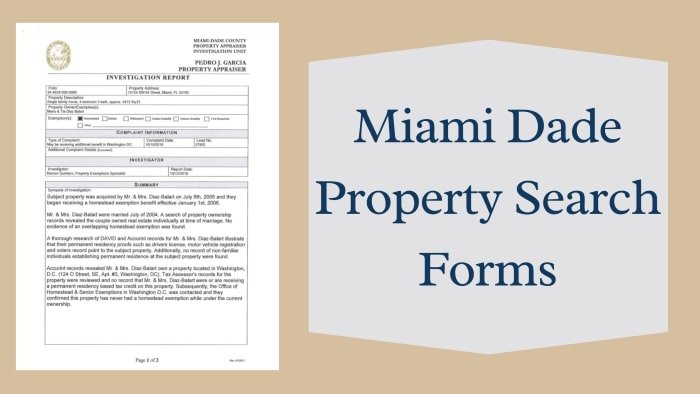
- Exemption applications: Homestead, Senior, Disability, and Veteran exemption forms.
- Assessment appeal forms: Documents required to challenge property valuations.
- Ownership change forms: Used when properties are sold, inherited, or transferred.
- Tax payment forms: For residents who prefer to submit payments by mail or in person.
- General inquiry forms: Allow residents to request information or clarification about property records.
By centralizing these forms, the platform ensures that residents can quickly access the paperwork they need. Each form includes instructions, reducing confusion and helping users complete submissions correctly.
Why These Features Matter Together?
Individually, each feature of the Miami property search—comprehensive records, tax information, ownership verification, and neighborhood insights—serves a distinct purpose. Together, they form a cohesive, reliable system that supports informed decision-making at every step.
A buyer can start with neighborhood insights to identify promising areas, use comprehensive records to understand a specific property’s background, verify ownership to ensure a clean transaction, and review tax information to plan a budget that stands up over time.
A homeowner can check that records are accurate, confirm exemptions, and see how their property compares locally, all in one place. A researcher can trace trends across parcels and years, using consistent data that reflects real-world changes.
Role of the Miami Dade Property Appraiser!
The Miami Dade Property Appraiser is responsible for maintaining Miami Dade Property Records and ensuring fair property taxation. The office evaluates property values across the county, and these assessments directly affect property taxes for homeowners and generate revenue for local government.
When you use the Miami Dade Property Search, you access data curated and maintained by the Miami Dade Property Appraiser. This ensures information is accurate, up-to-date, and legally recognized in all Miami Dade property appraiser searches.
The appraiser’s office also guides exemptions, appeals, and property classifications. For example, homeowners may qualify for homestead exemptions, which reduce taxable value. Investors may need clarity on commercial property assessments. All of this is streamlined through the appraiser’s oversight.
Understanding Miami Dade Property Search
The Miami Dade property search system covers one of the largest and most diverse counties in Florida, with urban, suburban, and coastal properties. Each area has unique property values and tax implications, all of which can be explored through a Miami Dade property search.
Through the Miami-Dade property search, users can explore:
- Residential properties.
- Commercial properties.
- Vacant land.
- Agricultural parcels.
This comprehensive platform ensures no property is overlooked. From downtown condos to rural land, users can access detailed Miami-Dade Property Records for all types of properties through the Miami Dade Property Search.
The Property Search Miami Dade platform is user-friendly, making property searches simple for everyone, regardless of technical expertise.
The search interface allows users to input:
- Property address.
- Owner’s name.
- Parcel number.
Once you submit your query, results appear in a clear, easy-to-read format. The Miami Dade Property Search system is accessible to all users, from first-time buyers to experienced investors.
| Official Name | Miami Dade Property Search |
|---|---|
| Portal | Property Search |
| County | Miami-Dade County |
| Language | English |
| Country | USA |
Miami Dade Property Exemptions & Benefits
One of the most critical aspects of property management in Miami-Dade County involves exemptions and benefits. These programs are designed to reduce the financial burden on qualifying property owners.
Common Exemptions
- Homestead Exemption: Provides tax relief for primary residences, ensuring that homeowners are not taxed excessively on their main property.
- Senior Citizen Exemption: Offers additional benefits to elderly residents who meet income and residency requirements.
- Disability Exemption: Assists individuals with permanent disabilities by lowering property tax obligations.
- Veteran Exemption: Extends benefits to veterans, particularly those with service-related disabilities.
Benefits of Exemptions
Exemptions not only reduce property taxes but also encourage long-term residency and community stability. For example, the homestead exemption protects homeowners from sudden spikes in property taxes caused by rising property values. Similarly, senior exemptions recognize the financial challenges faced by retirees living on fixed incomes.
By offering these exemptions, Miami-Dade County demonstrates its commitment to fairness and inclusivity, ensuring that property ownership remains accessible to diverse groups of residents.
Miami Dade Property Assessments
Property assessments are another cornerstone of the Miami Dade Property Search system. Assessments determine the taxable value of properties, which directly impacts the amount of property taxes owed.
How Assessments Work?
County appraisers evaluate properties based on factors such as:
- Location and neighborhood characteristics.
- Size of the land and improvements.
- Market trends and comparable sales.
- Condition of the property.
These assessments are updated annually to reflect changes in the real estate market. Property owners receive notices outlining the assessed value, the exemptions applied, and the estimated taxes.
Importance of Assessments
Accurate assessments ensure that property taxes are distributed fairly across the county. They also provide transparency, allowing residents to understand how their tax obligations are calculated.
For property owners, assessments serve as a reminder to review exemptions and verify that records are correct. If discrepancies arise, owners have the right to appeal, ensuring that the system remains equitable.
About Miami Dade Property Search
Miami-Dade Property Search is more than just a database—it is a reflection of the county’s dedication to transparency, efficiency, and public service.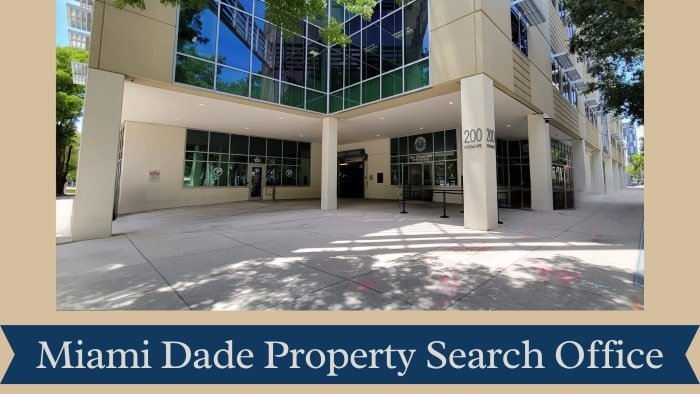 The platform was developed to meet the growing demand for accessible property information in a rapidly expanding urban area. Miami-Dade County, known for its diverse population and dynamic real estate market, requires systems that can handle large volumes of data while remaining user-friendly.
By investing in digital infrastructure, the county has created a tool that benefits homeowners, businesses, and researchers alike. The system embodies values such as:
- Accessibility: Ensuring that all residents, regardless of background, can access property information.
- Efficiency: Reducing wait times and eliminating unnecessary paperwork.
- Transparency: Providing clear records that build trust between residents and government offices.
- Innovation: Leveraging technology to improve public services.
FAQs
How do I search Miami-Dade property records?
You can search Miami-Dade property records using the Property Appraiser’s online tool. Enter an address, folio number, owner’s name, or subdivision to view ownership, assessments, exemptions, and taxable values. The system also provides aerial imagery, building sketches, and sales history for transparency.
How do I contact the Miami-Dade property appraiser?
The Miami-Dade Property Appraiser can be reached at 305-375-4712 for general inquiries. South Dade residents may call 305-232-3810. You can also email PAWebmail@MiamiDadePA.gov for property or exemption questions. Offices handle residential, commercial, agricultural, and exemption services, ensuring specialized support.
Is there a fee to search Miami-Dade records?
Searching property records online is free. However, fees apply for copies: 15 cents per page for photocopies, 20 cents for double-sided, and $1 per certified copy, as outlined in Florida Statute 119.07. These charges cover incidental costs for public records requests.
What is the 5-point rule in Miami-Dade?
The “5-point rule” applies to Miami-Dade County Public Schools. To pass a class for the year, students must earn 10 points total, with at least 5 points in the second semester. Grades from quarters and exams are weighted to calculate points, ensuring balanced performance across terms.
How do I speak to someone at the Miami Dade Clerk of Courts?
You can contact the Miami-Dade Clerk of Courts by calling 305-275-1155, the Interactive Voice Response System. Specific departments, such as Civil, Criminal, or Family Courts, have direct lines listed on the Clerk’s website. In-person assistance is available at courthouse offices across Miami-Dade.
Conclusion!
The Miami Dade Property Search homepage serves as a gateway to a wealth of property-related information and services. By combining property search tools, online services, exemptions and benefits, property assessments, forms, and FAQs, the platform ensures that residents have everything they need in one place.
This system reflects Miami-Dade County’s commitment to modernization, transparency, and public service. Whether someone is buying a home, applying for exemptions, reviewing assessments, or simply exploring property data, the Miami Dade Property Search platform provides the resources necessary to make informed decisions.